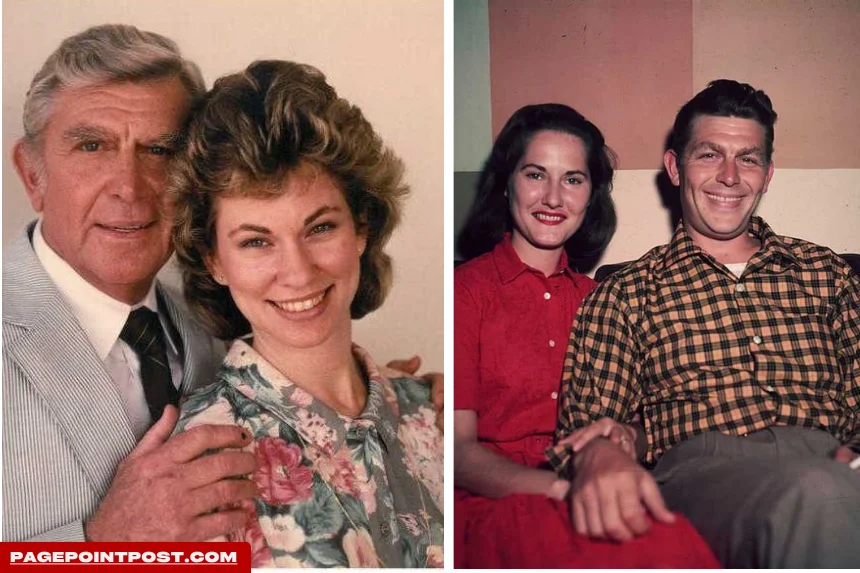



Adrienne Rodriguez, whose full married name was Adrienne Lois Rodriguez Brown, was the third wife of soul and funk legend James Brown. She worked as a television hairstylist, married Brown in 1984, and remained legally married to him until her death on January 6, 1996.
However, her public story extends far beyond a celebrity marriage. Contemporary records describe a relationship marked by reconciliation, a divorce filing, repeated assault allegations, drug-related turmoil, and legal intervention. Her sudden death after cosmetic surgery also produced years of questions, even though the coroner officially ruled it accidental.
The name requires careful identification because several unrelated people appear in search results. Meanwhile, the Susquehanna University music professor and Adrienne Rodriguez Ayres, who died in Louisiana in 2022, are different women. This article concerns only Adrienne Lois Rodriguez Brown, James Brown’s third wife.
Adrienne Rodriguez Quick Facts
| Fact | Verified or carefully supported information |
|---|---|
| Full name | Adrienne Lois Rodriguez Brown |
| Known for | Being James Brown’s third wife |
| Spouse | James Brown |
| Marriage year | 1984 |
| Marriage ended | January 6, 1996, through her death |
| Profession | Television hairstylist and makeup professional |
| Reported TV work | Days of Our Lives and Solid Gold |
| Death date | January 6, 1996 |
| Death place | Century City Hospital in Los Angeles |
| Official manner of death | Accident |
| Children with James Brown | None reliably documented |
Who Was Adrienne Rodriguez?
Adrienne Rodriguez was a television hairstylist who became publicly known through her marriage to James Brown. Before that relationship placed her in entertainment headlines, she reportedly worked behind the scenes on television productions.
Adrienne Brown’s Associated Press obituary described her as a former hairstylist for shows including Days of Our Lives and Solid Gold. Other biographical references also describe makeup-related work, which fits the same behind-the-scenes television career.
That professional background matters because modern biography pages sometimes call her a singer, composer, actress, or musician. Reliable evidence for those careers is weak. The strongest available record identifies her with hairstyling and makeup work rather than a public recording or acting career.
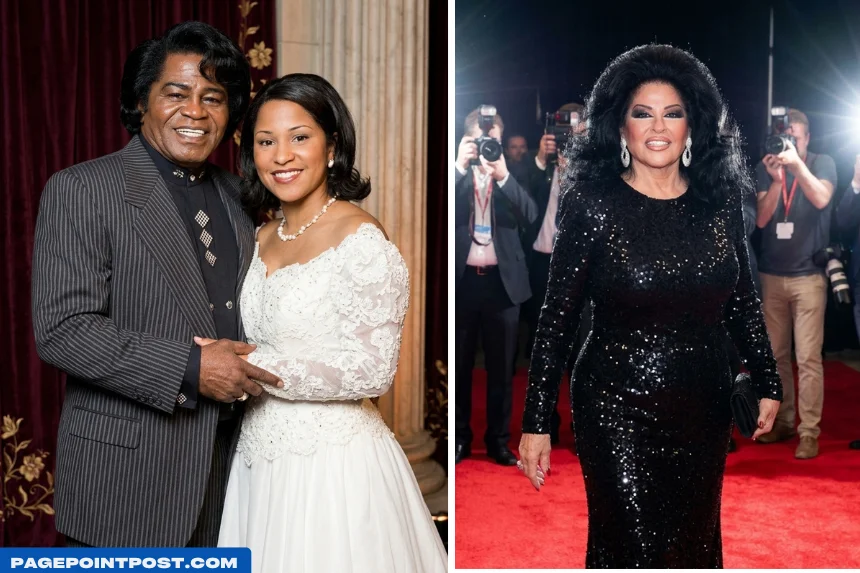
She became a familiar figure beside James Brown during award ceremonies, promotional events, and photographs from the 1980s and early 1990s. However, she did not build an independent celebrity brand, publish a memoir, or leave a large archive of interviews.
As a result, much of her story survives through brief newspaper reports, public records, James Brown biographies, memorial databases, and later investigations. That limited archive makes source quality especially important.

Which Adrienne Rodriguez Is This Article About?
The subject is Adrienne Lois Rodriguez Brown, who married James Brown in 1984 and died in 1996.
Several unrelated people share the same name.
The Susquehanna University professor
A current university profile identifies an Adrienne Rodriguez who works in music education. University directories and program pages connect her with teaching, music, and academic work.
She is not James Brown’s wife. Writers should never add that professor’s education, employment, photographs, or achievements to a biography of Adrienne Lois Brown.
Adrienne Rodriguez Ayres
A funeral-home obituary concerns Adrienne Rodriguez Ayres, a Louisiana woman born in 1934 who died in 2022. She married William Louis Ayres and raised four daughters.
Therefore, she has no connection to James Brown’s third wife.
How to identify the correct person
Look for these details:
- Full or married name: Adrienne Lois Brown.
- Relationship: James Brown’s third wife.
- Marriage: 1984.
- Death: January 6, 1996.
- Profession: former television hairstylist.
If a page describes a university professor, a 2022 Louisiana obituary, or a different spouse and family, it concerns another person.
Early Life and the Age Discrepancy
Most modern memorial and biography pages list March 9, 1950 as Adrienne’s birth date. That date would make her 45 when she died in January 1996.
However, contemporary reports were inconsistent. Some early newspaper and wire-service articles described her as 47. A later report discussing the preliminary autopsy described her as 45, and the final coroner-related coverage also used 45.
The difference may reflect an early reporting error, a record discrepancy, or incorrect information supplied during the first hours after her death.
Therefore, the safest wording says that most records place her birth in 1950 and her age at death at 45, although some initial reports gave 47.
Meanwhile, reliable public information about her parents, childhood, schooling, and early residence remains limited. Some genealogy pages provide additional details, but they do not create a complete, independently verified early-life biography.
A responsible profile should not invent an upbringing, educational degree, or family narrative simply because the available record is thin.
Her Work as a Television Hairstylist
Adrienne worked behind the scenes in television rather than primarily in front of the camera.
Contemporary reports published immediately after her death described her as a former hairstylist who had worked on television shows including Days of Our Lives and Solid Gold.
Hairstylists and makeup professionals play an important production role. Their work can include:
- Preparing performers for studio lighting and cameras.
- Maintaining hairstyles between scenes.
- Coordinating appearance with costume and makeup teams.
- Handling continuity across filming days.
- Preparing guests and performers for live or recorded broadcasts.
Accessible sources do not clearly document the exact dates of Adrienne’s television work. Neither is a complete list of credits.
Therefore, it would be inaccurate to build a long filmography or claim that she had a major acting career. The verified point is narrower: she had professional hairstyling experience connected with television productions.

How She Became James Brown’s Third Wife
James Brown’s official legacy established him as one of the most influential figures in American popular music before he married Adrienne.
He was known as the “Godfather of Soul,” “Mr. Dynamite,” and the “Hardest Working Man in Show Business.” His performances, rhythmic innovations, band leadership, and recordings helped shape funk, soul, hip-hop, and modern popular music.
Before Adrienne, Brown had married Velma Warren and Deidre “Deedee” Jenkins. Those marriages ended in divorce.
He married Adrienne in 1984. Some biographical references identify September as the marriage month, but stronger public records do not consistently establish an exact wedding day.
Adrienne became his third wife and appeared beside him during a major period in his later career. Brown recorded “Living in America,” entered the Rock and Roll Hall of Fame, received major lifetime honors, and continued touring during their marriage, as outlined in the James Brown career timeline.
For example, public photographs show the couple attending music-industry events and promotional appearances. Those images document a visible partnership, but they do not reveal the private reality of the relationship.
Inside the Marriage
The marriage lasted for more than a decade, but it was not a simple celebrity love story.
Contemporary reporting repeatedly described serious conflict. Drug use, assault allegations, police involvement, divorce efforts, and reconciliation all formed part of the public record.
Some older articles used phrases such as “stormy marriage.” That description is brief, but it can minimize the seriousness of domestic-violence allegations.
A more accurate summary is that the relationship involved repeated claims of physical abuse and legal intervention. Adrienne accused Brown of assault on multiple occasions, while Brown denied or contested some allegations. Later, prosecutors or complainants dropped several charges.
Dropped charges do not prove that an alleged incident never happened. Domestic-violence cases may end without prosecution for many reasons, including reconciliation, witness decisions, evidentiary problems, fear, financial dependence, or legal strategy.
Likewise, remaining married does not mean that a spouse approved of mistreatment.
The public record shows a relationship that continued despite serious conflict. It does not give outsiders enough evidence to explain every private decision Adrienne made.
Divorce Filing and Reconciliation
In 1988, Adrienne reportedly filed for divorce and cited mistreatment or cruelty.
The filing occurred during a period when James Brown faced several legal and drug-related problems. Later that year, he became involved in the highly publicized police chase that contributed to a prison sentence.
Although Adrienne initiated divorce proceedings, the marriage did not legally end. The couple reconciled and remained husband and wife until her death.
Reconciliation is a fact about the relationship’s legal history. However, reconciliation does not dismiss her earlier complaints.
People return to or remain in difficult relationships for complex reasons. Emotional attachment, family considerations, finances, public pressure, hope for change, and fear can all influence decisions.
No accessible interview gives Adrienne’s complete explanation. Therefore, biography writers should avoid claiming that love “conquered” the conflict or that she forgave every event.
Domestic-Violence Allegations
James Brown’s treatment of women has become an important part of the historical discussion surrounding his life.
Adrienne accused him of assault several times during their marriage. Contemporary reports said she made multiple complaints, and established career timelines record at least one arrest involving assault allegations against his wife.
The legal record remains complicated because several cases ended without a conviction. It is therefore necessary to distinguish among four terms:
- Allegation: A claim that conduct occurred.
- Complaint: A report made to police or another authority.
- Arrest: Law enforcement takes a person into custody based on legal grounds.
- Conviction: A court determines guilt or the accused enters a guilty plea.
An arrest is not the same as a conviction. However, the absence of a conviction does not make repeated complaints irrelevant.
Later accounts of James Brown’s family life also include domestic-violence testimony connected with an earlier marriage. That broader history gives context, but Adrienne’s experiences should remain separate from those of Brown’s other wives.
The correct editorial approach is neither to sensationalize nor erase the allegations. They belong in the biography because they shaped the marriage and public record.
Did Adrienne and James Brown Have Children Together?
Reliable public records identify no children shared by Adrienne and James Brown.
James Brown had several children from other marriages and relationships. Online family lists sometimes create confusion by placing all of his children beneath every spouse’s name.
That structure can wrongly imply that Adrienne was their biological mother.
A careful article should say only that no publicly documented children are known to have been born to the couple during their marriage.
This does not describe Adrienne’s possible relationships with Brown’s children. Public evidence is not strong enough to define whether she acted as a stepmother, how close those relationships were, or what occurred privately within the family.
Adrienne’s Final Days
According to a contemporary report of Adrienne’s death, she traveled to the Los Angeles area in early January 1996 for an elective cosmetic procedure.
The procedure took place in a doctor’s office on January 4. Later coroner-related reporting identified it as liposuction.
Afterward, she recovered at an after-care facility in Beverly Hills. Such facilities provide short-term support following outpatient procedures, although the exact level of medical supervision varies.
On January 6, she collapsed at the facility.
Staff called paramedics, who attempted to resuscitate her. They transported her to Century City Hospital, where doctors pronounced her dead shortly after noon.
The death attracted immediate attention because:
- She was married to a famous musician.
- She had undergone surgery two days earlier.
- The collapse appeared sudden.
- The cause was not immediately known.
- The marriage had a well-documented history of conflict.
Initial reports could not provide a final cause because toxicology and microscopic testing required additional time.

Preliminary Autopsy Findings
Initially, the preliminary autopsy findings did not identify major physical trauma.
A coroner’s representative said investigators found early signs of heart disease. They planned further tissue and toxicology testing before announcing the official cause.
Authorities said they did not suspect foul play at that stage.
Hospital representatives also said they had no indication that the surgery directly caused the death. That statement reflected preliminary information, not the final complete medical conclusion.
This distinction matters because online summaries often choose one of two overly simple explanations:
- “She died from cosmetic surgery.”
- “The surgery had nothing to do with her death.”
Neither statement fully represents the final findings.
The procedure did not emerge as a single isolated cause. However, her weakened postoperative condition became one factor in the coroner’s later explanation.
What the Final Coroner Findings Said
Ultimately, the coroner’s final accidental-death findings presented a more complex conclusion than the early headlines.
The coroner found PCP in her system along with several prescription medications. Contemporary coverage listed therapeutic levels of drugs including Demerol, Valium, Vicodin, and morphine.
The report also described underlying heart disease and physical weakness following liposuction.
Authorities ruled the manner of death accidental.
The available reporting supports a combined-risk explanation:
- PCP affected her body.
- Prescription medications were present.
- Heart disease made her medically vulnerable.
- She was recovering from a recent procedure.
- The factors interacted rather than producing one simple cause.
It is important not to claim that every prescription medication was found at a lethal level. Contemporary coverage specifically described therapeutic levels for several drugs.
Likewise, writers should not describe PCP as the only cause. The official account considered her cardiac condition and postoperative weakness as part of the fatal combination.
Did Cosmetic Surgery Cause Her Death?
Cosmetic surgery was part of the medical context, but the official finding did not reduce the death to surgery alone.
Adrienne underwent liposuction two days before she collapsed. Recovery from surgery may involve fluid shifts, pain, stress on the cardiovascular system, medication use, and reduced physical resilience.
However, the final reported findings also identified PCP, prescription drugs, and heart disease.
Therefore, the most accurate answer is:
Recent liposuction contributed to the circumstances surrounding her death, but the coroner described a combination of drugs, heart disease, and postoperative weakness rather than surgery as the sole cause.
This wording avoids both exaggeration and dismissal.
Was Adrienne Rodriguez Murdered?
Importantly, no official finding established that Adrienne Rodriguez was murdered.
The Los Angeles County investigation initially found no significant trauma and no evidence of foul play. The coroner later classified the death as accidental.
More than two decades later, the 2019 CNN investigation revived questions.
A retired detective discussed the allegation in CNN’s interview transcript, describing notes that an informant had given him years earlier. According to the later report, the notes contained an allegation that a doctor had confessed to entering Adrienne’s recovery room and deliberately causing a fatal drug overdose.
That allegation was serious, but it was not the same as proven evidence.
The publicly available record does not show that:
- A court found someone responsible for murder.
- A prosecutor filed homicide charges.
- The coroner changed the manner of death to homicide.
- The alleged confession was independently verified.
- The notebook alone established who administered the drugs.
Therefore, the responsible conclusion remains that later reports alleged murder, but authorities never officially established it.
Why the Death Still Attracts Questions
Nevertheless, several factors continue to fuel public suspicion.
The sudden timing
Adrienne collapsed only two days after surgery while staying in an after-care facility.
The drug combination
PCP and multiple prescription medications were present, creating questions about what she took, when she took it, and who supervised her recovery.
The marriage history
Repeated assault allegations make later readers more willing to consider foul play, even though suspicion is not evidence.
The later notebook allegation
The informant story introduced a possible intentional-overdose theory that had not been part of the original public explanation.
Questions about James Brown’s death
The same later investigation also examined doubts about James Brown’s 2006 death. Linking the two stories increased public attention, although each death requires separate evidence.
These circumstances justify careful historical questions. They do not justify declaring an uncharged person guilty.
Official Findings vs. Later Claims
| Question | Official or documented position | Later claim or uncertainty |
| Was there major physical trauma? | Preliminary autopsy reported none | Later suspicion focused on drugs, not visible trauma |
| Did investigators suspect foul play in 1996? | No | A later informant allegation raised questions |
| What was the manner of death? | Accident | No cited official homicide reclassification |
| Was PCP present? | Yes | Questions remain about how and when it was taken |
| Were prescription drugs present? | Yes, several at reported therapeutic levels | Their combined effect remained medically important |
| Did surgery matter? | Postoperative weakness formed part of the context | Surgery alone was not identified as the sole cause |
| Was murder proven? | No | Alleged in later reporting, but not established |
The table shows why both certainty and sensationalism are inappropriate. The official result is clear, while some factual questions remain unresolved in the public imagination.
What Happened After Her Death?
Finally, Adrienne’s death ended the marriage legally in January 1996.
James Brown continued performing and recording. Later, he began a relationship with singer Tomi Rae Hynie, and the two held a wedding ceremony in the early 2000s. The legal status of that later marriage became the subject of separate court disputes after Brown’s death.
Adrienne’s own biography remained overshadowed by her husband’s career and controversies.
Most later articles mentioned her only in lists of James Brown’s wives, discussions of domestic violence, or reports about unexplained deaths.
That limited framing can make her appear only as a tragic supporting character.
A fuller biography recognizes that she had a professional life before and during the marriage, appeared publicly in the entertainment world, attempted to leave the relationship, reconciled, and died under medically complicated circumstances.
Same-Name Profiles That Should Not Be Combined
Two supplied competitor pages illustrate why identity checking is essential.
University music educator
The Adrienne Rodriguez connected with Susquehanna University is an academic professional in music education. Her credentials and current position belong to her alone.
Writers should never add those credentials to James Brown’s wife’s biography.
Louisiana obituary subject
Adrienne Rodriguez Ayres was born in New Orleans in 1934 and died in 2022. She was the wife of William Ayres and the mother of four daughters.
She lived a separate life and had no identified connection to James Brown.
Genealogy and memorial pages
WikiTree and Find a Grave can help locate names and dates, but both rely heavily on community-contributed content. They should support, not replace, contemporary reporting.
When details conflict, medical, legal, institutional, and contemporary news records deserve greater weight.
Common Myths and Corrections
Myth: Adrienne was a famous singer
The strongest contemporary evidence identifies her as a hairstylist and makeup professional, not a recording star.
Myth: She and James had children together
Reliable public records identify no shared children.
Myth: She definitely died because the surgery went wrong
The coroner reported a combination involving PCP, prescription drugs, heart disease, and postoperative weakness.
Myth: The surgery had no relevance
Her weakened condition after liposuction formed part of the reported medical context.
Myth: Murder was officially proven
The official manner remained accidental. A later allegation did not establish homicide.
Myth: Reconciliation proves the assault allegations were false
Reconciliation does not determine whether an alleged incident occurred.
Myth: Every page named Adrienne Rodriguez is about James Brown’s wife
Several current academics and obituary subjects share the name.
Adrienne Rodriguez Timeline
| Year or date | Event |
| March 9, 1950 | Commonly listed birth date, although early reports later differed on her age |
| Before 1984 | Works as a television hairstylist and makeup professional |
| 1984 | Marries James Brown and becomes his third wife |
| Mid-to-late 1980s | Appears publicly with Brown during a major period in his career |
| 1988 | Reportedly files for divorce amid allegations of mistreatment |
| 1988 | Brown faces drug, assault, and other legal problems before a major police chase |
| 1991 | Brown leaves prison and resumes touring |
| Early 1990s | Adrienne and Brown remain married after reconciliation |
| January 4, 1996 | Undergoes cosmetic surgery later identified as liposuction |
| January 6, 1996 | Collapses during recovery and dies at Century City Hospital |
| January 8, 1996 | Preliminary findings report heart disease, no major trauma, and no foul-play suspicion |
| February 1996 | Final reporting describes PCP, prescription medicines, heart disease, and postoperative weakness; death ruled accidental |
| December 25, 2006 | James Brown dies in Atlanta |
| 2019 | A major investigation publicizes an unproven allegation of an intentional overdose |
| 2026 | The official accidental-death finding remains the controlling public conclusion |
Adrienne Rodriguez FAQ
1. Who was Adrienne Rodriguez?
Adrienne Rodriguez, also known as Adrienne Lois Rodriguez Brown, was a former television hairstylist and James Brown’s third wife. They married in 1984 and remained married until her death in 1996.
2. Was Adrienne Rodriguez James Brown’s wife?
Yes. She was his third wife. He had previously married Velma Warren and Deidre Jenkins.
3. When did Adrienne and James Brown marry?
They married in 1984. Some references identify September, but a consistently verified exact wedding day is not widely available.
4. What did Adrienne Rodriguez do for work?
Contemporary reporting described her as a former television hairstylist who worked on productions including Days of Our Lives and Solid Gold. Some sources also describe makeup-related work.
5. Did Adrienne Rodriguez and James Brown have children?
Reliable public records identify no children shared by the couple. James Brown had children from other relationships and marriages.
6. Why did Adrienne file for divorce?
She reportedly filed in 1988 and cited mistreatment or cruelty. The couple later reconciled, and the marriage continued until her death.
7. How did Adrienne Rodriguez die?
She collapsed on January 6, 1996, while recovering from liposuction. The coroner reported PCP, several prescription drugs, heart disease, and postoperative weakness and ruled the death accidental.
8. Did cosmetic surgery cause her death?
The surgery formed part of the medical context, but the coroner did not identify it as the sole cause. The final explanation involved drugs, heart disease, and her weakened condition after the procedure.
9. Was Adrienne Rodriguez murdered?
Authorities did not officially establish murder. A later investigation reported an unproven intentional-overdose allegation, but no cited official ruling changed the death from accident to homicide.
10. Is the Susquehanna professor the same Adrienne Rodriguez?
No. The Susquehanna University music educator is a different person. The 2022 obituary for Adrienne Rodriguez Ayres also concerns an unrelated woman.
Conclusion
Adrienne Rodriguez was more than a name in James Brown’s marriage history. She worked as a television hairstylist before her life became intertwined with one of the most influential entertainers of the twentieth century.
The couple married in 1984 and remained legally married until January 1996. Their relationship included public appearances, reconciliation, a divorce filing, repeated assault allegations, and serious drug-related turmoil.
Moreover, her death occurred suddenly under medically complicated circumstances. The coroner linked it to PCP, prescription medications, heart disease, and physical weakness after liposuction and ruled it accidental.
A later murder allegation created renewed suspicion, but it did not establish homicide or replace the official finding.
Finally, readers should distinguish Adrienne Lois Rodriguez Brown from unrelated people with the same name. The university professor and Adrienne Rodriguez Ayres belong to entirely different biographies.