

Britannica is a long-running reference and education brand best known for Encyclopaedia Britannica. Today, the name can mean the general encyclopedia at Britannica’s main encyclopedia website, a school or library research service, or the historic printed volumes that began appearing in Edinburgh in 1768. Therefore, the right meaning depends on whether someone wants a quick overview, classroom content, academic research support, or an old book set.
Britannica remains useful because editors organize broad subjects into readable reference articles. However, it is not an error-proof substitute for primary evidence, scholarly research, or current official data. The best approach is to use Britannica for orientation, identify the people and terms that matter, and then confirm important claims through authoritative sources.
| Quick answer | What readers should know |
|---|---|
| What is Britannica? | A reference and education brand built around the Encyclopaedia Britannica tradition |
| When did it begin? | The first edition appeared in parts from 1768 to 1771 in Edinburgh |
| Is it still published? | Yes, primarily through digital reference and education products |
| Are new multivolume print sets produced? | No; the 2010 edition became the last new printed edition |
| Is Britannica reliable? | Generally useful as an edited tertiary source, but readers should verify significant or current claims |
| Is it free? | Some content may be accessible without payment, while full or specialized services may require consumer or institutional access |
| Best use | Building background knowledge, finding key terms, and starting research |
What Is Britannica?
Britannica is both a famous encyclopedia and a wider group of reference-learning products. Its identity grew from Encyclopaedia Britannica, an English-language work designed to collect and explain knowledge across subjects. Although many people picture rows of large books, the modern brand works mainly through websites, databases, media collections, and classroom platforms.
The spelling sometimes causes confusion. The historic title uses “Encyclopaedia,” while American writers often use “Encyclopedia Britannica” in ordinary searches. Both usually point to the same reference tradition. Meanwhile, “Britannica” alone can refer to the company, its general website, a school database, or a particular edition.
Britannica also operates within an education ecosystem. Britannica Education presents products for schools, higher education, libraries, and multilingual learning. Consequently, a student using a school login may see a different interface and set of tools than a reader visiting the public encyclopedia site.
Which Britannica Product Do You Need?
The easiest way to understand Britannica today is to match the product to the task. A family researching a general topic does not need the same service as a school district, university library, or collector. Moreover, institutional products may include features that the public website does not offer.
| Need | Best starting point | Typical advantage |
| General background reading | Britannica.com | Broad expert-edited encyclopedia articles |
| K–12 assignments | Britannica School | Age-appropriate reading levels and classroom media |
| College background research | Britannica Academic | Academic reference tools and institutional access |
| Public-library research | Britannica Library | Content organized for patrons with varied reading needs |
| Rights-cleared educational visuals | Britannica ImageQuest | Curated images for educational use under product terms |
| Historical research | Digitized or physical editions | Evidence of how knowledge was presented in earlier periods |
Britannica.com for General Research
Britannica.com serves readers who want an overview of a person, place, event, scientific idea, artwork, or historical period. Articles often introduce a subject’s defining facts, important vocabulary, chronology, and wider context. As a result, the site works well at the beginning of research.
Access can vary by article, location, product design, and subscription status. Therefore, readers should inspect the current official offer rather than assume that every page or feature is completely free. A paid plan may add fuller access or remove limits, but promotions and terms can change.
Britannica School for K–12 Learning
Britannica School targets students and educators rather than general subscribers. It typically combines encyclopedia material with multimedia and learning supports. Most importantly, school-oriented content can present topics at reading levels suited to different learners.
Schools generally arrange access for their users. Therefore, a student may enter through a district portal, library page, single sign-on system, or location-based connection. If the public Britannica page requests payment, checking a school’s digital-resource list may reveal existing access.
Britannica Academic and Library Access
Britannica Academic supports higher-education research with reference articles and related research material. Nevertheless, students should treat an encyclopedia as a starting point unless their instructor explicitly accepts it as a final source. College work usually becomes stronger when it progresses to books, scholarly articles, primary documents, official statistics, or original research.
Britannica Library serves public-library users and may provide several reading levels or audience pathways. Access rules depend on the subscribing library. Consequently, patrons should ask a librarian or search the library’s database page before buying individual access.
How Britannica Creates and Updates Reference Content
Britannica follows an edited publishing model. That means named specialists, editorial staff, or both may develop and revise articles instead of allowing any visitor to change the live text directly. This structure can improve consistency, accountability, and organization.
However, an editorial process does not guarantee that every sentence is current or uncontested. Knowledge changes, newly available evidence can alter interpretations, and specialists can disagree. Moreover, broad reference articles must compress complicated subjects, so they may omit details that matter in a focused investigation.
Readers should look for an article’s author information, revision history, “last updated” date, bibliography, or related links when available. Those signals help reveal how recently the page changed and where deeper research can begin. Ultimately, transparency around authorship and sourcing matters as much as the reputation printed above an article.
Authors, Editors, and Article Revisions
Different Britannica entries may follow different authorship patterns. Some identify a specialist contributor, while editorial teams may create, adapt, or update other material. Therefore, readers should not assume one person wrote every visible word or that an original contributor approved every later revision.
Revisions also create a version problem. A current web page can differ from a print edition or an earlier online version. If the exact wording matters, researchers should record the page title, URL, update information, and access date according to their required citation style.
Why Citations and Update Dates Still Matter
A strong reference article gives readers a map of a subject, but a map is not the entire landscape. For example, an encyclopedia may summarize a court decision, scientific finding, or government statistic without reproducing the complete record. Therefore, consequential research should follow that summary back to the original decision, study, or dataset.
Dates matter especially for political offices, wars, medical guidance, company leadership, population totals, and rapidly changing technologies. Even an accurate statement can become outdated. Consequently, readers should compare the article’s revision date with the date required by the question.
Britannica History: From Edinburgh to a Digital Platform
Britannica’s development spans print culture, industrial publishing, CD-ROM competition, and the internet. The following timeline highlights turning points rather than listing every edition.
| Period | Development | Why it mattered |
| 1768–1771 | First edition issued in 100 weekly parts and three volumes | Established the Britannica project in Edinburgh |
| 1777–1784 | Second edition expanded to 10 volumes | Showed demand for a larger reference work |
| 1788–1797 | Third edition reached 18 volumes | Deepened the project’s scale and reputation |
| 1768–1860 | First eight editions eventually totaled 143 volumes | Documents major early growth |
| 20th century | Britannica became a widely recognized household and institutional reference | Expanded its international cultural reach |
| 1990s–2000s | Digital formats and online access became central | Allowed faster searches and revisions |
| 2010 | Final new multivolume print edition | Marked the endpoint of the traditional print series |
| 2012 onward | Company emphasized digital reference and educational services | Shifted the living product away from printed sets |
The 1768 First Edition
The first Britannica emerged during the Scottish Enlightenment, when Edinburgh played a major role in intellectual and publishing life. Printer Colin Macfarquhar and engraver Andrew Bell organized the enterprise, while William Smellie compiled the first edition for a fee. The National Library of Scotland reports that publication began in 1768 and continued in weekly parts until the work formed three volumes.
Readers can now explore digitized early editions through the National Library of Scotland. Its collection covers the first eight editions from 1768 to 1860, totaling 143 volumes. Therefore, the archive supports research into both historical subjects and the changing organization of knowledge.
Expansion Into a Major Reference Work
Britannica expanded rapidly after its first edition. The second edition reached 10 volumes, while the third grew to 18. In addition, later editors sought contributions from leading specialists, helping transform the project from a compact compilation into a major reference institution.
This growth also reflected changing expectations. Readers wanted more subjects, deeper explanations, and updated discoveries. Nevertheless, printed encyclopedias always faced a built-in delay: research, editing, typesetting, manufacturing, and distribution took time, while the world continued to change.
Why Britannica Stopped Printing New Sets
Digital publishing offered searchable text, multimedia, links, and more frequent revision. Meanwhile, large print sets were expensive to manufacture, ship, store, and replace. Computers and online search also changed how families and students found basic information.
Britannica announced its shift away from new printed sets in 2012, making the 2010 edition the last new multivolume edition. The decision ended a print run of more than two centuries, but it did not end Britannica itself. Instead, the organization concentrated on digital reference and education services.
Is Britannica Reliable?
Britannica is generally a credible tertiary reference source for introductions, definitions, broad context, and research vocabulary. Its edited model gives it meaningful advantages over unreviewed web pages. However, readers should not treat the brand as a guarantee that every claim is complete, current, or beyond dispute.
Reliability depends on the article, subject, revision date, contributor, evidence, and use case. A stable historical date may require less freshness than an election result or medical recommendation. Similarly, a concise biography can accurately cover major events while leaving out relevant debate.
The balanced answer is therefore practical: Britannica is often a strong place to start, but important research should not end there. Use it to understand the field, then verify the facts that carry the greatest consequences.
Strengths of Britannica as a Reference Source
Britannica’s chief strength is structured synthesis. Editors can organize a complex topic, define specialized terms, and connect related events without forcing a beginner to sort through thousands of search results. Moreover, an article may identify contributors or offer references that help readers judge authority.
The platform also separates audience needs through education products. Younger students may receive accessible language and multimedia, whereas academic users may need denser context and research tools. This deliberate presentation can make information easier to use than an unfiltered search engine result page.
Britannica’s Limits and Possible Errors
No encyclopedia can cover every interpretation or update every topic instantly. Errors, omissions, outdated wording, and disputed framing can occur. In addition, condensed articles sometimes hide uncertainty because they must summarize long arguments in a small space.
Bias also deserves careful attention. Editors choose which facts to include, how much space to assign them, and which terms to use. Those decisions do not automatically prove improper bias; nevertheless, readers should compare sources when a subject involves politics, identity, religion, territorial disputes, or evolving scholarship.
What the Britannica and Wikipedia Study Actually Found
A widely discussed 2005 Nature comparison asked specialists to review a limited sample of science-related entries from Britannica and Wikipedia. The investigation reported serious errors in both and found more total factual errors, omissions, or misleading statements in the Wikipedia sample. However, Britannica disputed the study’s design and interpretation, while Nature defended its work.
This disagreement matters because people often reduce the study to a slogan. It examined a small historical sample, not every article, subject, or current version. Therefore, it cannot prove that either encyclopedia always wins. Its most durable lesson is that reputable reference works still require critical reading.
Why Customer Reviews Cannot Measure Accuracy Alone
Consumer reviews can reveal subscription, cancellation, interface, search, or support experiences. However, a small self-selected review set cannot measure millions of factual statements across a reference database. Reviewers may also discuss different products, editions, countries, or expectations.
Consequently, readers should separate two questions: “Was this customer satisfied?” and “Is this specific article accurate?” The first calls for current customer-service evidence; the second requires subject expertise and source comparison. Neither answer automatically resolves the other.
How to Use Britannica for Research
Britannica works best as the first stage of a research funnel. Start broad, extract the key entities and terms, and then move toward more direct evidence. This process prevents beginners from searching with vague language while also avoiding overreliance on one summary.
A simple workflow looks like this:
- Read the overview for basic context.
- Write down important names, dates, terms, organizations, and disputes.
- Check the author, update date, references, and linked topics.
- Search for primary documents, official records, or scholarly research.
- Compare disputed or time-sensitive claims across reliable sources.
- Cite the strongest source that directly supports each final claim.
This method uses Britannica’s clarity without asking it to do every job. As a result, the final research becomes both more efficient and more defensible.
Start With an Overview, Not the Final Claim
An overview helps readers learn the vocabulary experts use. For example, a student researching a revolution might discover the formal names of treaties, political groups, leaders, and turning points. Those entities make the next search far more precise.
Nevertheless, the encyclopedia summary should not automatically become the only citation. If the assignment asks what a law says, consult the law. If it asks what a scientist found, read the study or a trusted institutional summary of it.
Follow Sources and Verify Time-Sensitive Facts
When Britannica names a book, document, institution, or study, follow that trail. Then ask whether the cited material directly supports the relevant sentence. A reference list adds value, but readers still need to inspect the evidence.
For current facts, check an official source with a clear date. Government agencies, courts, universities, professional associations, and company filings may offer the newest record. Therefore, use the encyclopedia for context and the responsible authority for present status.
How to Cite a Britannica Article
Citation rules depend on MLA, APA, Chicago, or an instructor’s custom requirements. Generally, a citation may need the article title, contributor when identified, encyclopedia title, publisher, update date, URL, and access date. However, readers should follow the current style manual or citation guide required for their work.
Do not copy a generated citation without checking it. Names, dates, capitalization, and page details can be missing or incorrectly interpreted. Moreover, the visible article may change after access, so recording the date can help identify the version consulted.
Britannica vs. Wikipedia: Which Should You Use?
Britannica and Wikipedia use different publishing models. Britannica relies on commissioned or editorially managed material within a commercial reference organization. Wikipedia, by contrast, allows a large volunteer community to edit articles under public policies and displays a visible revision history.
The Encyclopaedia Britannica page on Wikipedia illustrates the open model while also offering a broad history of its commercial counterpart. Still, neither platform should serve as the sole authority for every task. The better choice depends on the topic, required depth, freshness, access, and type of evidence.
When Britannica May Be the Better Starting Point
Britannica may suit readers who want a concise, edited introduction with controlled authorship. It can also help teachers who need age-appropriate material through institutional education products. In addition, its structured presentation may reduce the distraction of constant community edits and debate pages.
For stable topics, a clear Britannica overview can quickly establish basic context. However, the reader should still verify claims that are controversial, consequential, or recently changed.
When Wikipedia May Be More Convenient
Wikipedia is free to read, covers an enormous range of topics, and can update quickly. Its citations, talk pages, and revision histories can help skilled users trace disputes and locate sources. Consequently, it often offers broader coverage of emerging events, niche subjects, and popular culture.
Yet openness creates unevenness. A well-watched article may contain extensive sourcing, while an obscure page may remain incomplete or unstable. Therefore, readers must evaluate the individual page rather than trusting or rejecting the entire platform as one unit.
Why Strong Research Uses More Than One Source
Using two encyclopedias is better than using one when they expose different details, but it still leaves the researcher within tertiary summaries. Strong research moves beyond both. For example, a historical investigation might combine an encyclopedia overview with archival documents and peer-reviewed scholarship.
Triangulation also helps uncover disagreements. When reputable sources conflict, readers can identify the exact disputed point and seek stronger evidence. Ultimately, research quality comes from matching each claim with the best available source, not from pledging loyalty to one website.
Is Britannica Free?
Britannica uses a mixed-access model. Readers may encounter publicly accessible material, limited views, premium consumer access, or institution-only services. Therefore, “Is Britannica free?” does not have one permanent answer for every page and product.
Prices and promotions can change, while school, university, and library contracts often use separate terms. A price quoted in an old review may be wrong today. Consequently, readers should confirm current costs on the official product page and review renewal, cancellation, trial, and regional conditions before paying.
The value also depends on the task. A casual reader may only need occasional public articles, whereas a family or school may benefit from curated education tools. Before subscribing, compare expected use with access already available through local institutions.
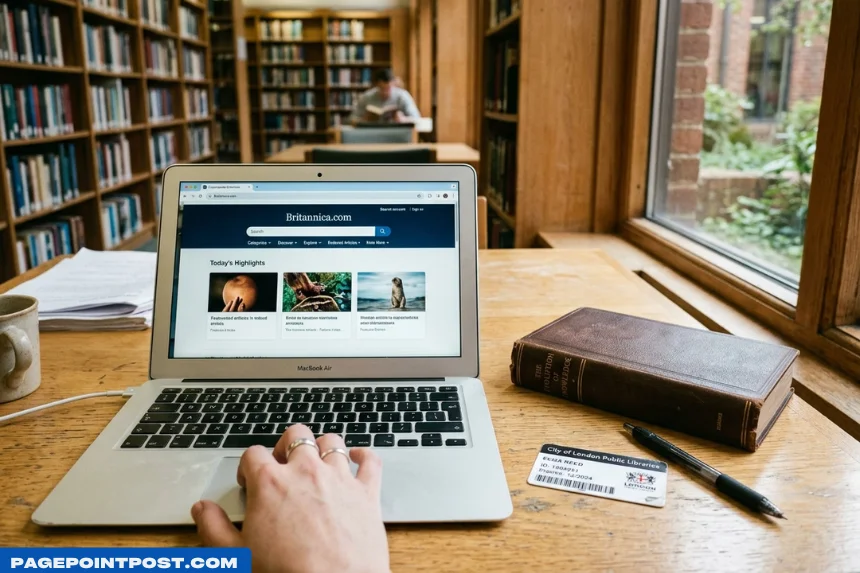
School and Library Access May Already Cover You
Many institutions license research databases for students, staff, or patrons. Access may work through a school portal, campus network, library card, or remote sign-in. Therefore, checking existing benefits can prevent an unnecessary individual purchase.
If access fails, ask the institution which Britannica product it provides and how remote authentication works. Britannica School, Britannica Academic, and Britannica Library serve different audiences, so the correct login page matters.
Are Old Encyclopaedia Britannica Sets Still Useful?
Old Britannica volumes can remain useful as historical objects, reading collections, design pieces, and evidence of how earlier societies organized knowledge. They can also preserve essays by notable contributors or illustrations that interest collectors. However, they should not guide current medical, legal, scientific, political, or statistical decisions.
An old article may accurately describe events known before publication while missing later discoveries or reflecting outdated language. Consequently, researchers should treat the publication date as part of the evidence. The volume tells readers what an edition presented at that time, not necessarily what experts accept now.
What Affects the Value of a Britannica Set?
There is no universal resale price. Edition, publication year, completeness, binding, condition, odor, markings, provenance, local demand, and shipping cost all affect value. Moreover, heavy multivolume sets can cost more to transport than buyers expect.
Before selling, identify the exact edition and printing, photograph the title and copyright pages, count every volume, and record damage honestly. Then compare recent completed sales rather than active asking prices. A rare early edition may interest specialists, whereas a common 20th-century set may have modest demand.
How to Check an Edition Before Buying
Inspect the title page, copyright page, edition statement, volume sequence, index, atlas, and yearbooks. Sellers sometimes combine volumes from different printings, so matching bindings alone may not prove a complete uniform set. In addition, check for mold, water damage, loose hinges, missing maps, and marked pages.
Buyers should decide whether they want readable reference books, decorative shelving, or a collectible edition. That purpose determines how much completeness and condition matter. For historical research, digitized institutional copies may provide easier access and clearer provenance.
Britannica in Modern Education
Modern Britannica extends beyond a single encyclopedia database. Its education catalog includes school and academic reference services, library products, multilingual resources, classroom content, and rights-cleared visual collections. Therefore, institutions can select tools for specific age groups and teaching goals.
These products compete in a learning environment filled with search engines, videos, generative AI, and open web pages. Britannica’s central proposition is curation: it organizes material for particular learners and instructional settings. Nevertheless, educators still need to teach source evaluation because curated content does not remove every possibility of error or bias.
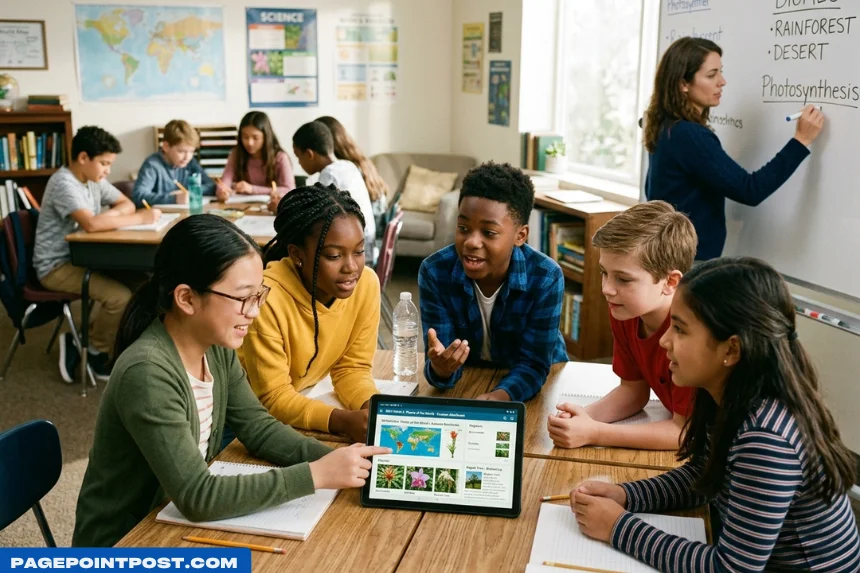
Britannica School and Reading-Level Support
Britannica School aims to make the same broad subject approachable to learners at different stages. Reading-level options, audio support, images, video, and related materials can reduce barriers for students. Moreover, a consistent research environment can help teachers model how to gather and cite information.
However, accessibility should not turn into passive copying. Students learn more when they summarize in their own words, ask what evidence supports a claim, and compare the overview with another dependable source. Britannica can support that process when educators frame it as guided research.
Britannica’s New AI-Supported Education Tools
Britannica Education now promotes AI-supported tools that can help educators develop differentiated materials from curated content. Such tools may save planning time and adapt explanations or activities for learners. However, AI-generated outputs can still require review for accuracy, age suitability, context, and instructional goals.
Teachers should remain responsible for final decisions. They should inspect generated questions, verify facts, protect student privacy, and follow school policies. Consequently, a trusted source collection can improve the input, but it does not make every automated output automatically correct.
Frequently Asked Questions About Britannica
The following answers address common searches about the encyclopedia, its history, access, and research value.
1. What does Britannica mean?
“Britannica” is a Latin-derived feminine form associated with Britain. In modern use, it usually refers to Encyclopaedia Britannica or the company’s reference and education products. However, the exact meaning depends on context.
2. Who founded Encyclopaedia Britannica?
Printer Colin Macfarquhar and engraver Andrew Bell organized the original Edinburgh enterprise. They hired William Smellie to compile the first edition. Therefore, all three figures play central roles in its founding story.
3. When was Britannica first published?
Publication began in Edinburgh in 1768. The first edition appeared in 100 weekly parts that formed three volumes, and completion came in 1771.
4. Does Britannica still print encyclopedias?
Britannica no longer produces new editions of its traditional multivolume encyclopedia set. The 2010 edition became the final new print edition, while the organization shifted its main focus to digital reference and education products.
5. Is Britannica a scholarly source?
Britannica is generally a tertiary reference source, not original scholarship. It can provide a credible overview and lead readers toward stronger evidence; however, many academic assignments require primary documents or peer-reviewed research.
6. Can students cite Britannica?
Students can cite it when an instructor permits encyclopedia sources. Nevertheless, they should follow the required style and use more direct evidence for specialized, contested, or advanced claims.
7. Is Britannica better than Wikipedia?
Neither source is better for every task. Britannica offers controlled editorial production, while Wikipedia offers open access, broad coverage, visible revisions, and rapid updates. Therefore, careful researchers evaluate the individual article and verify important claims elsewhere.
8. How often does Britannica update articles?
Update frequency varies by article and subject. Readers should inspect the visible revision information when available because fast-changing topics need newer evidence than stable historical subjects.
9. Can I access Britannica through a library?
Many public and academic libraries license Britannica products, but availability varies. Check the library’s database list or ask a librarian; moreover, remote access may require a library card and login.
10. Are old Britannica encyclopedias worth money?
Some rare, early, complete, or well-preserved editions may attract collectors. However, many common sets have limited resale demand, so compare completed sales and account for condition and shipping before estimating value.
Conclusion: Is Britannica Worth Using?
Britannica remains worth using when readers need an organized introduction, dependable terminology, historical context, or education-focused material. Its long history and edited publishing model give it real authority, while its digital products make the reference tradition more searchable and adaptable than the old shelves of volumes.
However, responsible use requires boundaries. Britannica is not automatically the final authority for a current statistic, scientific dispute, legal question, medical decision, or contested history. Therefore, start with its overview, inspect the article’s authorship and date, and confirm the most important claims through primary or scholarly evidence.
For students and families, institutional access may offer the best value. For collectors, old editions can provide historical and aesthetic interest, although age alone does not guarantee a high price. Ultimately, Britannica works best not as a shortcut around research but as a well-organized doorway into it.