


Wallachia was a medieval principality between the Southern Carpathians and Danube River. Today, almost all its historic territory lies within Romania. It emerged as a consolidated state in the early 14th century and eventually united politically with Moldavia in 1859, helping create modern Romania.
Many people first encounter Wallachia through Vlad the Impaler and the Dracula legend. Yet its real history reaches much further, involving Hungarian kings, Ottoman sultans, powerful boyars, shifting capitals, trade routes, revolutions, and the creation of the Romanian state.
Wallachia at a Glance
| Detail | Historical Answer |
| What was Wallachia? | A Romanian principality and historical region |
| Romanian name | Țara Românească |
| Alternative names | Walachia, Valahia, Vlahia |
| Location | Southern present-day Romania |
| Natural boundaries | Southern Carpathians and Lower Danube |
| Major divisions | Muntenia and Oltenia |
| State consolidation | Early 14th century |
| Key early ruler | Basarab I |
| Major independence milestone | Battle of Posada, 1330 |
| Famous ruler | Vlad III Dracula, “the Impaler” |
| Main religion | Eastern Orthodox Christianity |
| Historic capitals | Câmpulung, Curtea de Argeș, Târgoviște, Bucharest |
| Ottoman relationship | Tributary/vassal principality with internal autonomy |
| United with Moldavia | 1859 |
| Modern country | Romania |
Wallachia should not be confused with Transylvania. They were neighboring historical regions with very different political histories.
What Is Wallachia?
Wallachia is both a historical principality and geographical region of Romania.
Its core territory lies south of the Southern Carpathian Mountains and north of the Danube. Historically, the Olt River helped divide Wallachia into two major regions.
Muntenia, sometimes called Greater Wallachia, lies mainly east of the Olt. Oltenia, or Lesser Wallachia, lies west of it.
Today, Wallachia no longer exists as an independent political state.
Instead, its lands form a large part of southern Romania. Bucharest, Romania’s modern capital and largest city, stands within historical Wallachia.
Where Is Wallachia on a Modern Map?
The easiest way to locate Wallachia is through natural landmarks.
Imagine modern Romania. Find the great arc of the Carpathian Mountains. Then look south toward the Danube and Bulgaria.
The broad territory between them is historical Wallachia.
| Direction | Geographic Context |
| North | Southern Carpathians and Transylvania |
| South | Danube and present-day Bulgaria |
| East | Toward Dobruja and Moldavian lands |
| West | Toward the Banat and Serbian frontier |
| Central modern landmark | Bucharest |
This geography shaped Wallachian history.
The Carpathians provided natural defenses and mountain routes. Meanwhile, the Danube connected the region with Balkan trade and the expanding Ottoman world.
How Did Wallachia Begin?
Wallachia did not suddenly appear as one unified kingdom.
Before consolidation, smaller political units existed south of the Carpathians. A 1247 Hungarian charter, for example, mentions several local political formations in the region.
Later Romanian tradition attributed Wallachia’s foundation to Radu Negru, or “Radu the Black.” According to that tradition, he crossed the Carpathians from the Făgăraș region around 1290 and established authority south of the mountains.
However, historians treat that story cautiously.
Contemporary evidence makes Basarab I much more important to the documented formation of an independent Wallachian state.
Legend vs. Documented History
| Question | Traditional Story | Stronger Historical Evidence |
| Founder | Radu Negru | Basarab I central to consolidation |
| Approximate period | Around 1290 | Early 1300s |
| Relationship with Hungary | Initially connected | Basarab challenged Hungarian authority |
| Defining event | Legendary foundation | Battle of Posada |
| Historical certainty | Limited | Much stronger |
Therefore, calling Radu Negru the unquestioned “founder of Wallachia” oversimplifies the evidence.
Why the Battle of Posada Mattered
One event provides a much firmer starting point for Wallachia’s political independence.
In 1330, King Charles I of Hungary campaigned against Basarab I. The Hungarian army entered Wallachian territory but suffered a disastrous defeat during its retreat.
This became known as the Battle of Posada.
The victory gave Basarab’s principality greater political independence and international recognition. Historical accounts consequently treat 1330 as a defining moment in Wallachia’s consolidation.
Rather than a ceremonial declaration of independence, Wallachia’s emergence came through political consolidation and military survival.
Who Ruled Wallachia?
Wallachia’s ruler was usually called a voivode or prince.
However, this was not a simple hereditary monarchy where the eldest son automatically inherited the throne.
Powerful landed nobles called boyars played an important role in politics. Princes generally came from eligible ruling dynasties, but succession disputes could become fierce.
Foreign powers also influenced who ruled.
That combination produced frequent struggles involving:
- rival princely families,
- Wallachian boyars,
- Hungary,
- the Ottoman Empire,
- Transylvania,
- Poland-Lithuania,
- and later Russia.
Consequently, some Wallachian rulers held power more than once after losing and regaining the throne.
Vlad the Impaler is a famous example.
Wallachia and the Ottoman Empire
One of the biggest misconceptions is that the Ottoman Empire simply conquered Wallachia and turned it into an ordinary Ottoman province.
The reality was more complicated.
Wallachia came under Ottoman suzerainty and paid tribute. Sources place the beginning of this tributary relationship around 1417. Yet Wallachia retained significant internal institutions, its Christian religion, local elites, and its own princes.
That makes “Ottoman-controlled” more accurate than saying Wallachia simply disappeared inside the empire.
What Ottoman Suzerainty Meant
| Ottoman Influence | Wallachian Autonomy |
| Tribute payments | Local administration |
| Influence over rulers | Orthodox Christianity |
| Foreign-policy restrictions | Wallachian boyars |
| Military pressure | Local laws and institutions |
| Political intervention | Separate princely identity |
The balance changed repeatedly.
Strong rulers sometimes resisted Ottoman pressure. At other times, Ottoman influence over Wallachian politics became much stronger.
Vlad the Impaler and Wallachia
No Wallachian ruler is more internationally famous than Vlad III, commonly called Vlad the Impaler.
He was born into the House of Drăculești, a branch of the ruling Basarab dynasty. His father was Vlad II Dracul.
Vlad III ruled Wallachia on three separate occasions during the 15th century.
His turbulent reign unfolded while Wallachia occupied a dangerous frontier between Christian European powers and the expanding Ottoman Empire.
Vlad became infamous for using impalement as punishment and psychological warfare.
Stories about his cruelty circulated widely in Europe. Some came from hostile political environments and developed into sensational printed accounts.
Still, his reputation for severe violence was not purely a modern invention.
Is Wallachia the Home of Dracula?
Historically, Vlad the Impaler ruled Wallachia. Fictionally, Bram Stoker’s Count Dracula is associated much more strongly with Transylvania.
This difference causes endless confusion.
| Vlad III | Count Dracula |
| Real historical ruler | Fictional vampire |
| Ruled Wallachia | Created by Bram Stoker |
| Lived in the 1400s | Appeared in an 1897 novel |
| Christian medieval prince | Supernatural vampire |
| Fought political and military enemies | Fictional horror character |
| Used Drăculea/Dracula name | Named Count Dracula |
Therefore, Wallachia was Vlad the Impaler’s political homeland, while Transylvania became central to the popular Dracula mythology.
They are related stories, but they are not interchangeable.
Why Was Vlad Called Dracula?
The name has a historical origin independent of vampires.
Vlad’s father, Vlad II Dracul, became associated with the Order of the Dragon. The name “Dracula” or “Drăculea” used for his son essentially indicated his connection as the son of Dracul.
Centuries later, Bram Stoker selected “Dracula” for his vampire.
That literary choice permanently connected a Wallachian prince with one of popular culture’s most famous monsters.
However, Stoker’s vampire should not be treated as a biography of Vlad III.
Târgoviște: Wallachia’s Historic Political Center
Modern visitors naturally associate southern Romania with Bucharest.
Medieval Wallachia had other centers.
Târgoviște served for centuries as a major princely capital. Wallachia’s earlier political centers included Câmpulung and Curtea de Argeș. Bucharest became the capital later.
Wallachia’s Changing Capitals
| Capital | Historical Importance |
| Câmpulung | Early political center |
| Curtea de Argeș | Important early princely seat |
| Târgoviște | Major medieval capital |
| Bucharest | Later capital and today’s Romanian capital |
The movement of political power also reflects Wallachia’s changing economy and strategic needs.
Michael the Brave and a Brief Three-Land Union
Another major Wallachian ruler was Michael the Brave, or Mihai Viteazul.
He became prince of Wallachia in 1593 and fought major campaigns against Ottoman forces.
His greatest historical fame came around 1600.
For a brief period, Michael exercised authority over Wallachia, Transylvania, and Moldavia. The political arrangement did not survive long, and historians should not treat it as the modern Romanian nation-state appearing centuries early.
Nevertheless, Michael later became a powerful symbol of Romanian political unity.
Historical Britannica material describes his reign as a period when Wallachia briefly achieved significance far beyond its normal regional position.
What Was Everyday Wallachia Like?
Political history can make Wallachia seem like nothing except princes and wars.
Most Wallachians were neither.
Medieval society depended heavily on agriculture. Peasants formed the overwhelming majority of the population, while boyars controlled substantial land and political power.
Livestock and grain became important parts of the economy. Historical evidence indicates that Wallachian grain reached Mediterranean markets.
The Orthodox Church also held enormous cultural importance.
Romanian became the dominant spoken language, while Church Slavonic played an important historical role in administration and religious writing. Greek and other languages also appeared within Wallachian society at different periods.
Muntenia and Oltenia: Wallachia’s Two Main Parts
Wallachia was traditionally divided into two large regions.
Muntenia
Muntenia forms the larger eastern section. For that reason, it has sometimes been called Greater Wallachia.
Bucharest lies within this region.
Its broad plains became especially important for agriculture, while the northern foothills contain historic towns, monasteries, vineyards, and routes toward the Carpathians.
Oltenia
Oltenia lies west of the Olt River and is sometimes called Lesser Wallachia.
Its historical identity remains strong today.
The region stretches between the Olt, Danube, and Carpathian areas and contains major cultural sites.
This distinction survives even though Wallachia itself no longer exists as an independent state.
Religion in Wallachia
Eastern Orthodox Christianity became central to Wallachian identity.
The Orthodox Metropolitan See of Wallachia received recognition from the Ecumenical Patriarchate of Constantinople in 1359.
Monasteries became more than religious buildings.
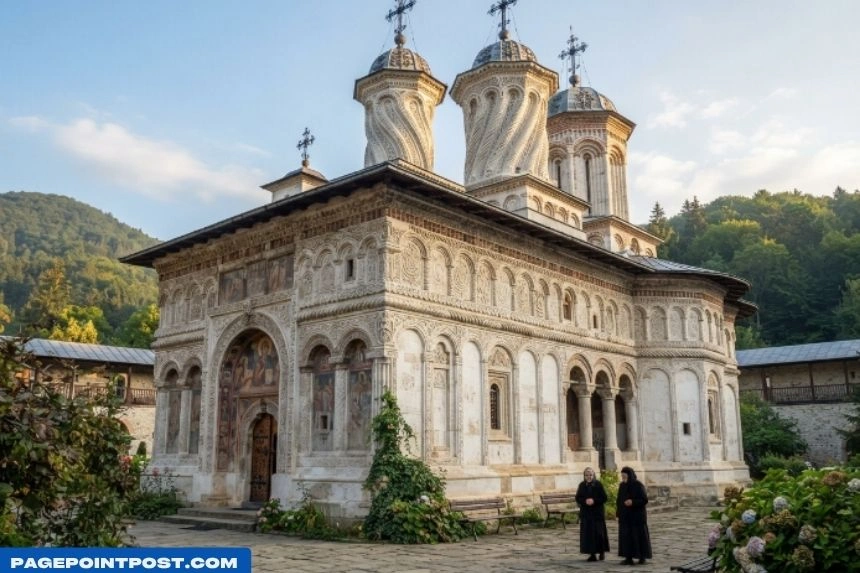
They served as cultural centers, landowners, burial places, artistic workshops, and symbols of princely authority.
Wallachian rulers frequently sponsored churches and monasteries. Several survive today and provide some of the clearest physical evidence of the principality’s cultural world.
Wallachia Was More Than a Battlefield
One reason popular accounts feel incomplete is their concentration on Dracula and Ottoman warfare.
Wallachia also sat on important commercial routes.
Its plains produced agricultural goods. Rivers connected communities with the Danube. Carpathian passes connected southern lands with Transylvania.
Later, agriculture became so important that the Wallachian plains developed a strong reputation for grain production.
Modern Wallachia remains geographically diverse. The region includes fertile plains, vineyards, foothills, mountain landscapes, old monasteries, historic towns, and Bucharest’s enormous urban area.
The Phanariote Period Changed Wallachian Politics
During the early 18th century, Ottoman influence entered another phase.
The Porte increasingly appointed rulers associated with prominent Greek families from Constantinople’s Phanar district. These rulers became known as Phanariotes.
This system reduced aspects of the older local political arrangement and strengthened Ottoman supervision.
However, Wallachia still remained institutionally distinct.
Meanwhile, another power was growing increasingly important: Russia.
Why Russia Became Important
By the 18th and early 19th centuries, the Ottoman Empire was no longer Wallachia’s only major external influence.
Russia repeatedly fought the Ottomans and expanded its political role in the Danubian principalities.
Russian troops occupied Wallachia at different points. Treaties between Russia and the Ottoman Empire increasingly affected Wallachian affairs.
After the Russo-Turkish War of 1828–1829, the Treaty of Adrianople expanded commercial freedoms and altered the political environment of Wallachia and Moldavia. Historical accounts note that Danube towns were restored and Ottoman commercial restrictions weakened.
Wallachia was gradually moving toward a new political era.
The 1848 Revolution in Wallachia
Europe experienced revolutionary upheaval in 1848.
Wallachia joined it.
Revolutionaries pushed for constitutional and political reforms. A provisional government emerged after Prince Gheorghe Bibescu accepted demands and then left.
However, the revolutionary government did not survive.
Ottoman and Russian intervention restored conservative political control.
The revolution failed in the short term.
Yet the ideas behind it—political reform, national identity, and greater independence—did not disappear.
They became increasingly important during the following decade.
How Wallachia Helped Create Romania
The defining political change came in 1859.
Wallachia and Moldavia both elected Alexandru Ioan Cuza as prince.
This clever political maneuver effectively united the two principalities under one ruler.
By 1862, their institutions were formally consolidated into the United Principalities of Romania, with Bucharest as capital.
From Wallachia to Romania
| Period | Development |
| Early 1300s | Wallachian principality consolidates |
| 1330 | Basarab I defeats Hungary at Posada |
| 1400s | Ottoman suzerainty develops |
| 15th century | Vlad the Impaler’s reigns |
| 1593–1601 | Michael the Brave era |
| 1700s | Ottoman and Russian influence intensifies |
| 1848 | Wallachian Revolution |
| 1859 | Wallachia and Moldavia elect Cuza |
| 1862 | Political institutions formally unify |
| Later 19th century | Modern Romanian state develops |
Wallachia did not simply “change its name” to Romania.
Instead, Wallachia and Moldavia formed the political core from which modern Romania developed.
Does Wallachia Still Exist Today?
Yes geographically and historically, but not as an independent country or administrative unit.
People still use Wallachia when discussing Romanian history and regional geography.
However, modern Romania is organized into counties rather than a political province officially called Wallachia.
The historic region survives mainly through Muntenia and Oltenia, local identities, architecture, historical sites, and cultural traditions.
Bucharest is perhaps the most obvious continuity.
A city that became Wallachia’s capital eventually became the capital of Romania.
Wallachia vs. Transylvania vs. Moldavia
These three names often appear together, yet they describe different historical regions.
| Feature | Wallachia | Transylvania | Moldavia |
| General location | Southern Romania | Central/northwestern Romania | Eastern Romania and historical lands farther east |
| Major natural feature | Danube plains | Carpathian basin | Eastern Carpathians and river valleys |
| Famous historical figure | Vlad III | Multiple Hungarian/Transylvanian rulers | Stephen the Great |
| Dracula connection | Vlad ruled here | Famous in Dracula fiction | Limited |
| Role in 1859 union | Yes | No | Yes |
| Part of modern Romania | Yes | Yes | Western historical portion largely yes |
This distinction solves one of the most common misconceptions about Romanian history.
Vlad the Impaler was principally a ruler of Wallachia—not the ruler of Transylvania.
Wallachia Myth vs. Reality
| Popular Idea | Historical Reality |
| Wallachia is fictional | False — it was a real principality |
| Wallachia is another name for Transylvania | False |
| Dracula ruled Wallachia | Vlad III did; fictional Dracula did not |
| Ottomans simply absorbed Wallachia | Too simplistic |
| Wallachia had only one capital | False |
| Wallachia became Romania alone | False — union with Moldavia was crucial |
| Wallachia disappeared completely | Politically yes; historically and geographically no |
| Bucharest was always its capital | False |
| Wallachian history is mainly about Vlad | False |
Wallachia Today: What Can Visitors Still See?
Historical Wallachia remains one of Romania’s richest areas for heritage tourism.
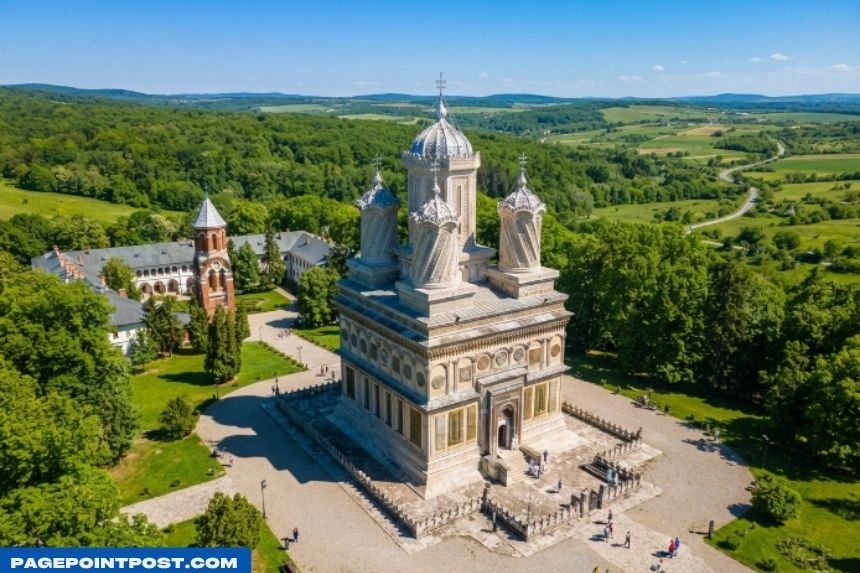
Târgoviște preserves connections with the medieval princely court. Curtea de Argeș contains major religious and royal monuments. Oltenia contains important monasteries and distinctive regional traditions.
The wider historical region also includes sites such as Horezu Monastery, which is recognized as a UNESCO World Heritage site. Mountain areas along the Carpathians provide a very different landscape from the agricultural plains farther south.
Therefore, exploring Wallachia today does not mean visiting one clearly marked province.
It means traveling through the historical landscapes of southern Romania.
Frequently Asked Questions About Wallachia
What is Wallachia?
Wallachia was a Romanian principality located mainly between the Southern Carpathians and Danube. Its historical territory forms part of modern Romania.
Is Wallachia a real place?
Yes. Wallachia was a real medieval and early-modern principality. Today, the name describes a historical and geographical region.
What country is Wallachia in today?
Historical Wallachia lies overwhelmingly within Romania.
Is Wallachia the same as Transylvania?
No. Wallachia lies south of the Southern Carpathians, while Transylvania occupies the region inside the Carpathian arc.
Did Dracula live in Wallachia?
The fictional Count Dracula did not. However, Vlad III Dracula, the historical prince who partly inspired the Dracula association, ruled Wallachia.
Who founded Wallachia?
Tradition credits Radu Negru. Historical evidence places greater importance on Basarab I, whose 1330 victory at Posada established Wallachian independence from Hungarian domination.
What was Wallachia’s capital?
Wallachia had several political centers, including Câmpulung, Curtea de Argeș, Târgoviște, and eventually Bucharest.
Was Wallachia part of the Ottoman Empire?
Wallachia became an Ottoman tributary and vassal principality but retained substantial internal autonomy rather than functioning simply as an ordinary Ottoman province.
What happened to Wallachia?
Wallachia united politically with Moldavia in 1859 under Alexandru Ioan Cuza. Their institutions formally merged in 1862, forming the foundation of modern Romania.
What are Muntenia and Oltenia?
They are Wallachia’s two traditional major regions. Muntenia forms the larger eastern section, while Oltenia lies west of the Olt River.
Final Perspective
Wallachia was far more than the backdrop to the Dracula legend.
It was a major Romanian principality that developed in the early 14th century, survived centuries between powerful neighboring states, produced rulers such as Basarab I, Vlad the Impaler, and Michael the Brave, and ultimately joined Moldavia in the political process that created modern Romania.
Its geography still shapes southern Romania. Its former capital Bucharest became the national capital. Its monasteries, princely courts, towns, and regional identities remain visible.
So, while Wallachia disappeared from Europe’s political map, it did not disappear from history. Much of the story of modern Romania begins there.
Read More At Page Point Post